

How the Right Classroom Tools Can Make All the Difference
Teacher burnout can disrupt sleep, affect work performance, and lead to an overall negative impact on modern K-12 education. Long-term, this can lead to declines in learning environments and student learning.
Teachers and students alike experience negative effects of teacher burnout in the school year. Preventing burnout is about more than restoring work–life balance because physical and emotional exhaustion can have other causes. For instance, disruptive behavior in the classroom can feel overwhelming even if the amount of time spent at work is normal.
For full-time employees and part-time substitute teachers alike, the emotional and physical symptoms of burnout should not go untreated.
Real practical tools like those in the Time Timer lineup help teachers reclaim structure and control in classrooms. Time-management tools can be key to burnout prevention.
The Scope of Teacher Burnout
The numbers from authoritative sources are hard to ignore. According to RAND's 2025 State of the American Teacher survey, teachers reported working a total of 49 hours per week on average, ten hours more than the average number of hours they were contracted to work. That invisible labor gap can include lesson planning after dinner, grading on weekends, or even responding to parent emails after hours, which is precisely where exhaustion can take root.
What Is Burnout?
Exhaustion, cynicism, and reduced professional efficacy can result.
The Connection Between Classroom Structure and Teacher Stress
Teacher burnout prevention can come from a classroom structured with some key time-management methods.
When students know what to expect, when transitions are predictable, and when time is visible and concrete, teachers do not have to constantly narrate, redirect, and remind.
Research consistently supports this. When students can see the time remaining, teachers don't have to repeatedly announce time updates. This frees teachers to circulate and support learning.
That shift from teacher as timekeeper to teacher as facilitator is a meaningful reduction in cognitive load over the course of a school day.
How Time Timer Helps Teachers Reclaim the Classroom
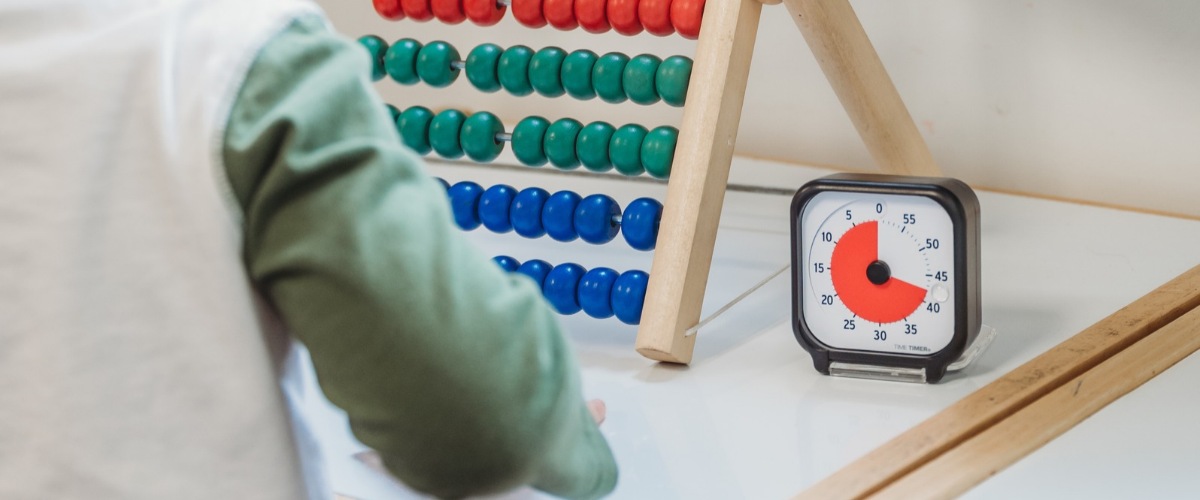
Time Timer visual timers are research-proven time-management tools trusted by teachers. These offer a clear visual representation of time passing that helps students stay on task and improve time-management skills.
Digital countdowns can easily blend into the background of a classroom. Time Timer visual timers’ iconic elapsing disk makes time tangible and immediate.
The timers are fit for students of all ages and learning abilities, including those with ADHD, autism spectrum disorder, anxiety, and English-language learners still developing time concepts. One glance at a Time Timer can bring immediate understanding of how much time remains for a task.
Fewer verbal reminders, smoother transitions, less negotiation about time, less friction around task completion, all add up to a less-exhausting day.
Time Timer's education line includes a full range of classroom-ready products.
The Time Timer Original 8" visual timer is perfect for individual and small-group use.
The Time Timer MAX visual timer makes for a great 17-inch classroom display.
Check out the full Time Timer education lineup to find the tool right for your classroom.
Real Classroom Benefits, Backed by Research
Time Timer is also grounded in a strong body of educational research. We strive to design products that align with the needs of all the learners in your room, not just some of them. We even have a Braille timer for learners with vision impairments.
Frequently Asked Questions About Teacher Burnout
-
What is teacher burnout? Teacher burnout is a state of chronic physical, emotional, and mental exhaustion caused by sustained, improperly managed workplace stress.
-
What are the main causes of teacher burnout in 2026? According to RAND's 2025 State of the American Teacher survey, the leading causes include managing student behavior (cited by 52% of teachers), low pay, working beyond contracted hours, and the growing responsibility of supporting students' mental health.
-
How can teachers prevent or reduce burnout? Effective strategies include building predictable classroom routines, reducing cognitive load through tools like visual timers, setting firmer work-hour boundaries, seeking peer support, and advocating for structural changes at the school level. Tools that reduce the need for constant verbal management — like classroom visual timers — are a practical, immediate step.
-
How does a visual timer reduce teacher stress? Visual timers externalize time management, which means students can self-monitor without relying on constant teacher reminders. This reduces verbal redirections and transition disruptions while supporting student self-regulation.
-
Is Time Timer effective for classroom management? Time Timer has been used in classrooms for over 30 years. Supportive research includes a Florida Atlantic University study showing improved self-regulation in young children using a Time Timer visual timer. Educators, occupational therapists, and special education specialists, can all enjoy the timers’ clarity, accessibility, and positive impact on transitions and task focus.
-
What Time Timer products work best for classroom use? The Time Timer MOD 120-Minute visual timer works well in small-classroom contexts. The Time Timer Original 12” visual timer is good for whole-class visibility. The Time Timer App Enterprise Edition bridges school and home, making it especially useful for continuity of routine.
Explore Time Timer for Education to see why teachers trust Time Timer visual timers. And if you want to dig into the research behind why visual timers work, start with Time Timer's research library. Explore the full Time Timer product lineup to find the right fit for your classroom.