

Every parent knows the feeling. School ends, routines disappear, and before long, summer days become a mix of sleeping in, endless screen time, and hearing "I'm bored" more times than you can count.
While summer is an important time for rest, play, and family memories, it's also when many children experience the summer slide—a loss of academic skills and learning momentum that can make the transition back to school more challenging.
The good news? Preventing the summer slide doesn't require turning your home into a classroom. In fact, a few consistent daily habits can make a meaningful difference. One simple tool that can help keep those routines on track is a Time Timer®.
What Is the Summer Slide?
The "summer slide" refers to the learning loss that can happen when students are away from school for several months.
Research has shown that children can lose skills in reading, math, and other academic areas during the summer if they aren't regularly practicing them. While every child is different, maintaining small, consistent learning opportunities throughout the break helps preserve what they've worked so hard to achieve during the school year.
Why Routines Matter During Summer
Children thrive on structure even when school is out. Without a schedule, transitions between activities can become more difficult. Tasks like reading, chores, outdoor play, or even getting ready for family outings may lead to frustration simply because expectations aren't clear.
Establishing a flexible daily rhythm gives children a sense of predictability while still allowing plenty of room for spontaneous summer fun.
Make Time Visible
For many children, time is an abstract concept. Saying, "Read for 20 minutes," or "We'll leave in 15 minutes," doesn't always provide enough information for children to understand how much time is actually passing.
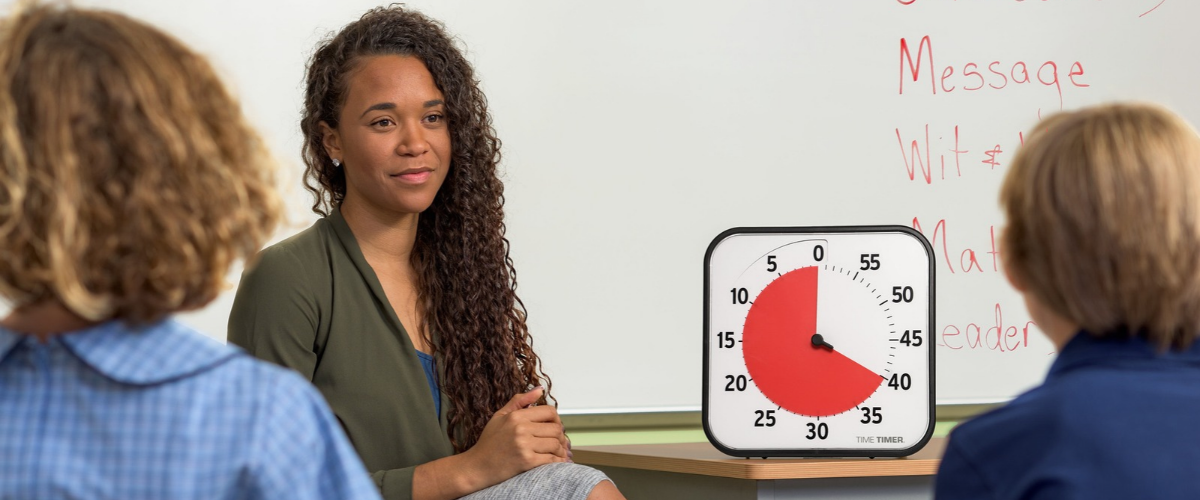
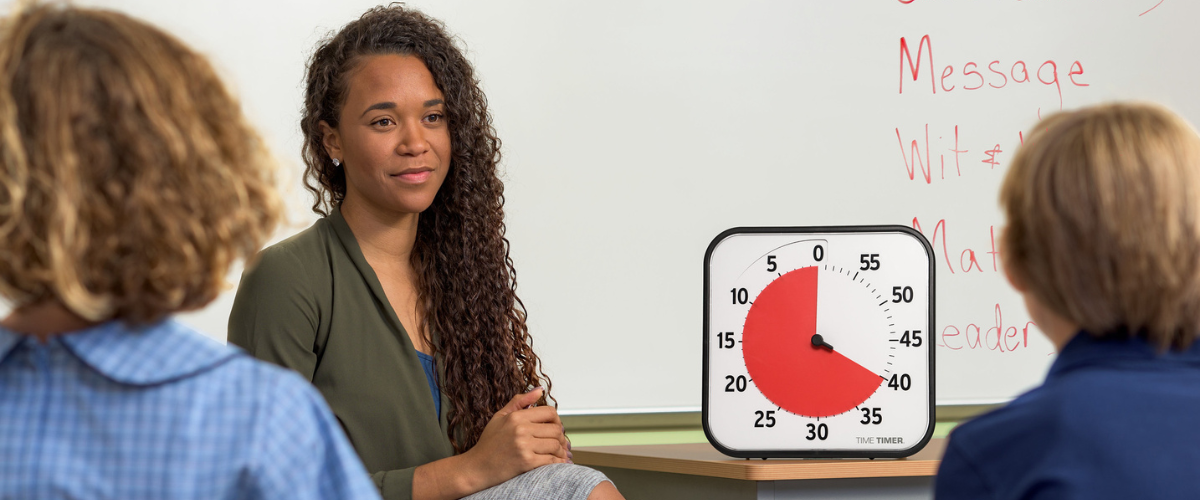
A Time Timer changes that by showing time visually. As the colored disk disappears, children can see time moving.
This simple visual cue supports:
-
Greater independence
-
Smoother transitions
-
Reduced stress around changing activities
-
Improved focus during learning time
-
Better understanding of time management
Whether your child is neurotypical or has ADHD, autism, executive functioning challenges, or anxiety, making time visible can reduce uncertainty and help create calmer daily routines.
Five Simple Ways to Use a Time Timer This Summer
1. Build a Daily Reading Habit
Summer reading doesn't have to be complicated.
Set the Time Timer for 20 minutes and invite your child to read until the colored disk disappears. Knowing there's a clear stopping point often makes reading feel more manageable.
For younger children, use the timer during story time together. Reading aloud continues to build vocabulary, comprehension, and a lifelong love of books.
2. Balance Screen Time
One of the biggest summer challenges is managing technology.
Instead of repeatedly reminding children that screen time is almost over, let the Time Timer provide a visual countdown.
Children know exactly how much time remains, making the transition to the next activity feel more predictable—and often resulting in fewer arguments.
3. Create Learning "Power Sessions"
Learning doesn't have to last hours to be effective.
Try setting aside one or two short learning sessions each day:
-
15 minutes of math practice
-
20 minutes of reading
-
10 minutes of handwriting
-
Educational games or puzzles
Short, focused practice helps maintain important skills without making summer feel like school.
4. Encourage Independent Play
Unstructured play is one of the greatest gifts of summer.
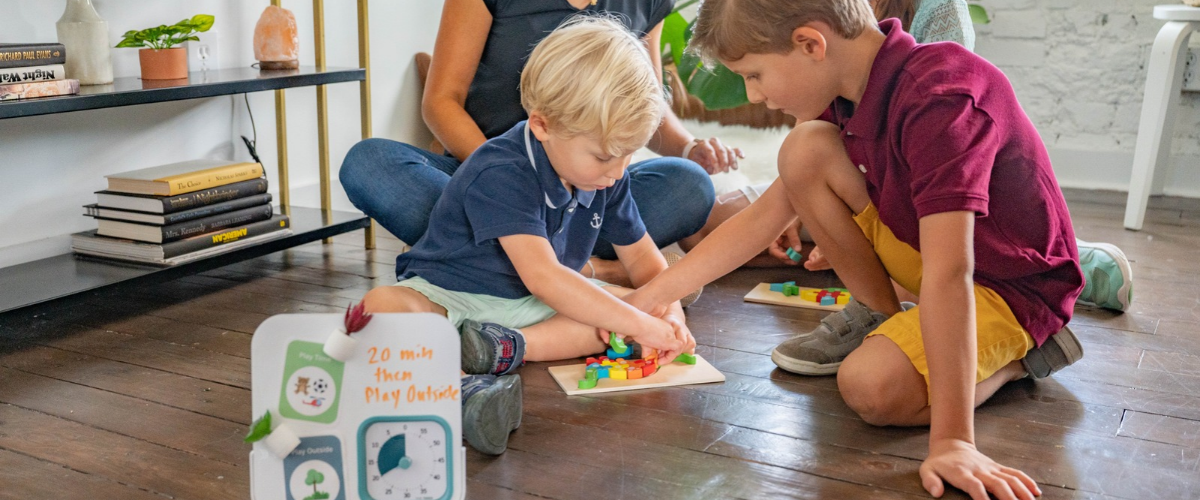
If your child struggles with independent play, try setting the Time Timer for 20–30 minutes and challenge them to build, create, draw, or imagine until the timer finishes.
Because they can see how much time remains, children often stay engaged longer and rely less on adults for entertainment.
5. Keep Morning Routines Consistent
While sleeping in occasionally is part of summer fun, completely abandoning routines can make returning to school much harder.
Use the Time Timer to guide simple morning habits like:
-
Getting dressed
-
Brushing teeth
-
Eating breakfast
-
Reading
-
Completing one learning activity before screen time
Children begin to understand what comes next without constant reminders.
Enjoy Summer Without Losing Momentum
Summer should be filled with bike rides, splash pads, family vacations, backyard adventures, and plenty of time to relax.
Adding just a little structure each day doesn't take away from the fun. A Time Timer helps families strike that balance by making time easier to understand, routines easier to follow, and learning feel less like a chore.
Because when time is visible, children can spend less energy wondering when something will end, and more energy enjoying what they're doing.