

The Screen Time Challenge Every Parent Feels
If you’ve ever tried to turn off a screen and been met with instant resistance, you’ve felt it: managing screen time today isn’t just about limits, it’s about emotions, attention, and daily rhythm.
Parents aren’t just asking “How much screen time is too much?” They’re asking something deeper: Why does it feel so hard to transition away from it?
That question sits at the center of a much bigger shift in how kids experience time, focus, and the world around them.
What Screen Time Is Replacing
The bigger concern isn’t simply the number of hours spent on screens. It’s what disappears when screens take over.
Unstructured play, in-person interaction, and even boredom begin to fade. And while boredom might feel uncomfortable in the moment, it plays a critical role in development. It’s often the starting point for creativity, problem-solving, and independent thinking.
When every quiet moment is filled with digital input, kids have fewer opportunities to build those internal skills. Over time, that changes not just how they play—but how they learn, regulate emotions, and manage time.
How Technology Is Reshaping Attention
Modern content is designed for speed. Short-form videos, quick transitions, and constant stimulation train the brain to expect information in fast, digestible bursts.
This has a noticeable impact. Many parents and educators are seeing that longer activities—reading, sustained play, even watching a full movie—can feel overwhelming or “too slow.”
It’s not that kids can’t focus. It’s that their brains are adapting to a different pace of input.
The Brain Science Behind It
At the center of this conversation is the prefrontal cortex—the part of the brain responsible for planning, emotional regulation, and time management.
This area develops slowly and isn’t fully mature until early adulthood. That means kids need consistent, real-world practice to strengthen these skills.
Hands-on experiences, physical play, and clear, structured routines all help build this part of the brain. When everything is mediated through a screen, those opportunities can become limited.
That’s why many educators and therapists are emphasizing the importance of tangible, real-world tools that make abstract concepts like time easier to understand.
Why More Families Are Going “Analog”
In response, many families are shifting, not away from technology entirely, but toward more intentional use.
This often looks like creating small pockets of the day that are screen-free. Mealtimes, mornings, or bedtime routines become opportunities to reconnect with real-world rhythms.
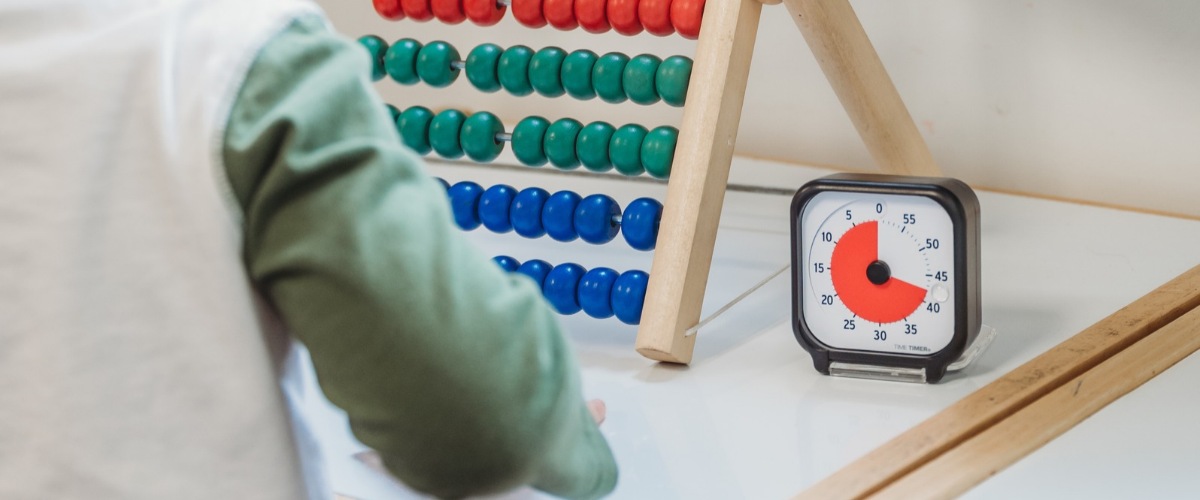
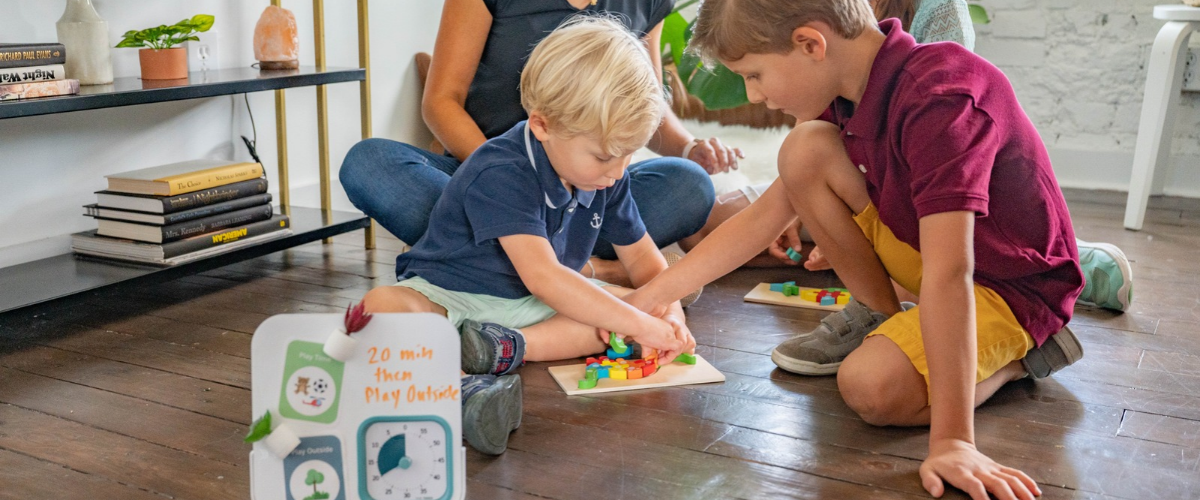
It can also mean reintroducing physical tools—like visual timers—that make time visible instead of abstract. When time can be seen, transitions feel more predictable, and expectations become clearer for everyone involved.
Why Transitions Are So Difficult
One of the most common pain points for families isn’t screen time itself—it’s what happens when it ends.
“Five more minutes” often leads to frustration, not because kids are defiant, but because time is still an abstract concept. Without something concrete to anchor that transition, it can feel sudden and unfair.
This is where visualizing time changes everything.
When kids can see time passing, they begin to understand it. That understanding builds trust, reduces conflict, and helps them develop independence over time.
A More Sustainable Approach to Screen Time
Rather than focusing only on restrictions, many families find more success by starting with values.
What matters most in your home? Is it connection, independence, creativity, or calm?
When those priorities are clear, decisions about screen time become easier. Technology becomes a tool that supports your goals, not something that competes with them.
And importantly, it shifts the dynamic. Instead of reacting to screens, you’re intentionally shaping how they fit into your day.
The Role of Time Awareness in a Digital World
One of the most overlooked skills in this conversation is time awareness.
In a digital environment where content is endless and autoplay is the norm, kids don’t get natural cues for when something begins or ends. That makes it harder to build a sense of pacing, duration, and completion.
By contrast, when time is externalized—through consistent routines or visual tools—kids begin to internalize it. They start to anticipate transitions, manage expectations, and build focus more naturally.
This is why time awareness is a foundational skill not just for managing screen time, but for supporting learning, behavior, and independence overall.
Start Small, Stay Consistent
If this all feels like a lot, it doesn’t have to be.
You don’t need to overhaul your entire routine. In fact, small, consistent shifts tend to work best.
Start with one part of your day. One transition. One routine.
The goal isn’t perfection—it’s helping your child experience time in a way that feels clear, predictable, and manageable.
Because when kids can see time, they can begin to understand it.
And when they understand it, everything from focus to behavior starts to fall into place.