

Time is an important yet often misunderstood resource we manage every day. Whether it is 15 minutes or two hours on a task, good time management is key.
Whether working, studying, or managing a classroom, staying on track often depends on how well you perceive time passing. From problem solving in a specific amount of time or keeping off social media for long periods of time, using a visual timer for time to focus can help you enter a flow state. No matter the type of work, there can be high-level returns in the real world's types of work environments that reward great time management.
But here’s the problem: time is invisible and abstract, which is why so many people struggle with traditional countdown timers. That’s also why visual timers are changing the way we can experience time-bound tasks.
The Problem: Time Is Abstract
Digital clocks, phone timers, or alarms are common for time management.
These tools technically track time but don’t really make time feel concrete. If you have 30 minutes, a numerical digital countdown doesn’t let your brain readily feel those 30 minutes passing.
That makes it easy to misjudge time because attention is divided between the task and tracking time internally.
What Is a Visual Timer?
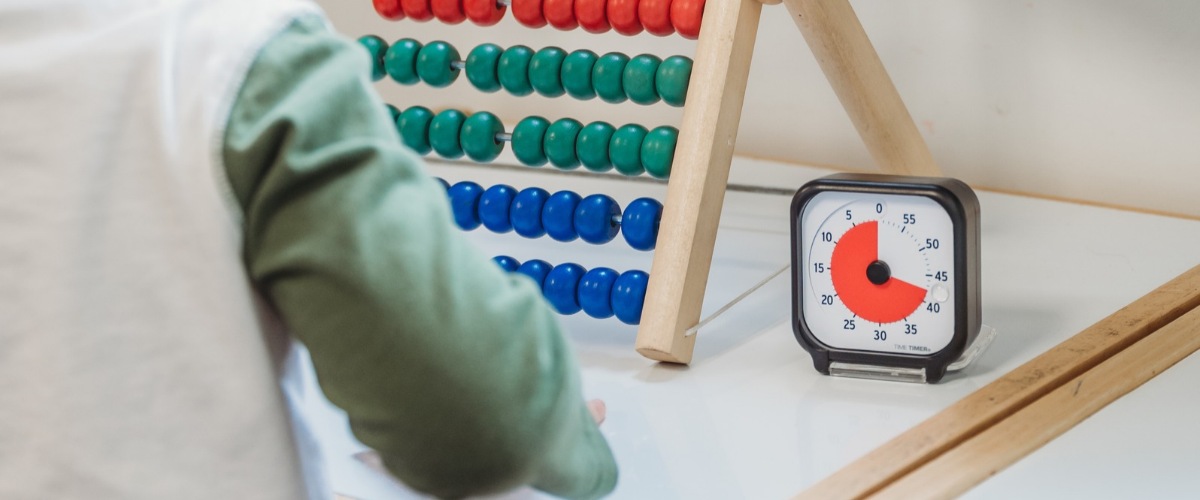
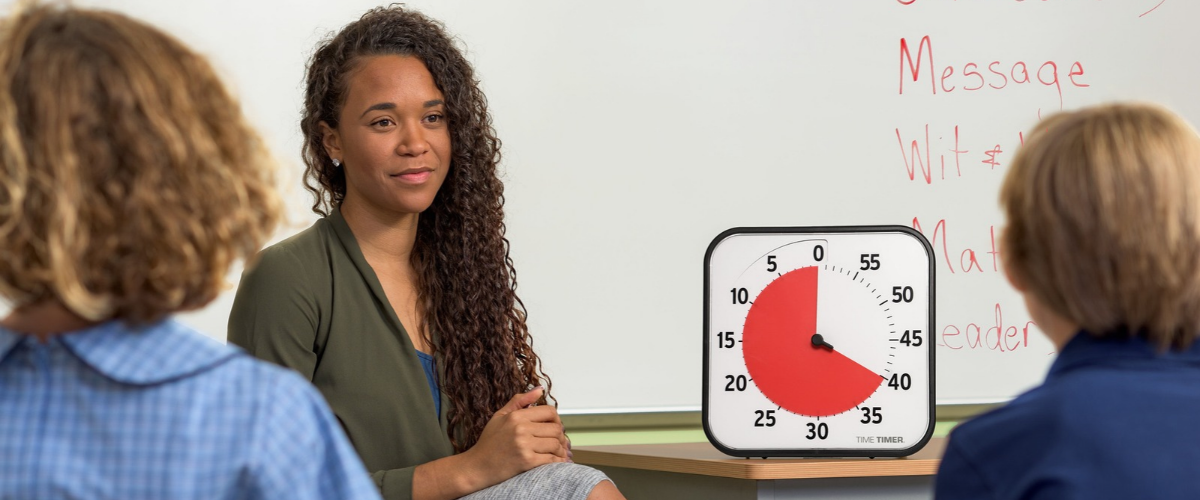
A visual timer is a time-management tool representing time as a shrinking visual element. With many of the Time Timer visual timers, that involves a colored disk disappearing as time passes.
Unlike a traditional timer requiring users to calculate remaining time, a visual timer shows time elapsing so that your brain processes time spatially instead of numerically. This simple shift transforms how we interact with time.
Why Visual Timers Feel Different
-
Reducing Cognitive Load: Visual timers make remaining time instantly visible, freeing your brain to focus on the task itself.
-
Making Time Tangible: When time is represented as something physically shrinking, this activates visual and spatial processing in the brain. Instead of abstract numbers, you get a clear beginning, visible middle, and defined end.
-
Reducing Anxiety: Timed tasks can trigger stress, especially in classrooms, workplaces, or high-pressure environments. Visual timers can reduce anticipatory anxiety because users can see exactly how much time remains, offering a sense of control in time management. Less anxiety can improve cognitive function in tasks where you need deep focus. In other words, good time management can lead to good mental health.
-
Improving Focus and Productivity: Visual timers can create a subtle sense of urgency without making it overwhelming. Instead of worrying about a numerical countdown, you can readily glimpse the timer to immediately see how much time is left. That lets you focus more on completing work with the security that you can readily check a visible time window. This encourages deep work, reduces procrastination, and builds momentum.
Why Visual Time Management Works
Visual timers align with how our brains naturally process time. Motion detection of objects like, say, an elapsing disk, are useful for measuring time partly because of the immediacy that vision affords.
Time perception depends on attention, so when we are distracted we tend to underestimate how much time has passed. External tools like visual timers reduce reliance on internal tracking, freeing up the mind to focus on the task at hand.
In healthcare settings, visual timers that reduce distraction can in turn reduce errors during time-sensitive tasks, reinforcing value beyond productivity into performance and safety.
Who Benefits Most From Visual Timers?
-
Students and Classrooms: Visual timers help students stay on task, transition between activities, and understand time limits. These are definitely useful in structured learning environments where time awareness is still developing among students.
-
Individuals with ADHD: For people with ADHD, time blindness is a major challenge. Visual timers externalize time, provide continuous feedback, and support better awareness. This makes the timers good ADHD time-management tools. People with learning disabilities in general can benefit from a visual timer.
-
Professionals and Remote Workers: In work environments, visual timers can improve focus during deep work sessions. A visual timer can be a small but powerful addition that helps structure meetings and tasks. In high-stress workplaces, the improved time management that comes from visual timers can prevent burnout from overworking. Even working from home necessitates going into work mode.
-
Healthcare and High-Stakes Environments: In medical and high-pressure settings, precision matters because mere seconds can be make or break. Visual timers help professionals track critical timing tasks, maintain focus despite interruptions, and reduce errors.
How to Use a Visual Timer Effectively
To get the most out of a visual timer, set clear time blocks. 25, 30, or 60 minutes are common and can be done with most of our timers.
Place the timer somewhere visible so you can readily track time passing. If close proximity would get you too in your head about the time, place the timer at a distance or in the corner of your eye so that you do not have the constant reminder of time passing.
Pair each timed session with a specific task to avoid multitasking. Use the timer to manage transitions between activities and build routines. Regular use strengthens time awareness and productivity habits.
Why Visual Timers Are the Future of Time Management
Traditional timers tell you merely that time is passing. Visual timers actually show you time is disappearing. That difference can change how your brain responds. Instead of guessing, stressing, or losing track, you gain clarity, control, and focus.
Have any questions about the Time Timer product line? Do not hesitate to reach out to us to learn more!