

Experienced teachers know the secret to a successful school year is to establish a foundation of classroom routines that make the room run smoothly.
Investing time in classroom management strategies during the first week of school can pay dividends all year long. Visual time-based classroom structures can be one of the simplest tools for building those routines. Learning environments for teachers and students alike come down to more than just classroom rules. The routines and procedures in the classroom environment can shape student behavior and classroom expectations that go beyond when homework assignments are due.
Below are five essential time-management routines to establish in your classroom, along with the visual timer tools that make each one click.
1. The Morning/Entry Routine
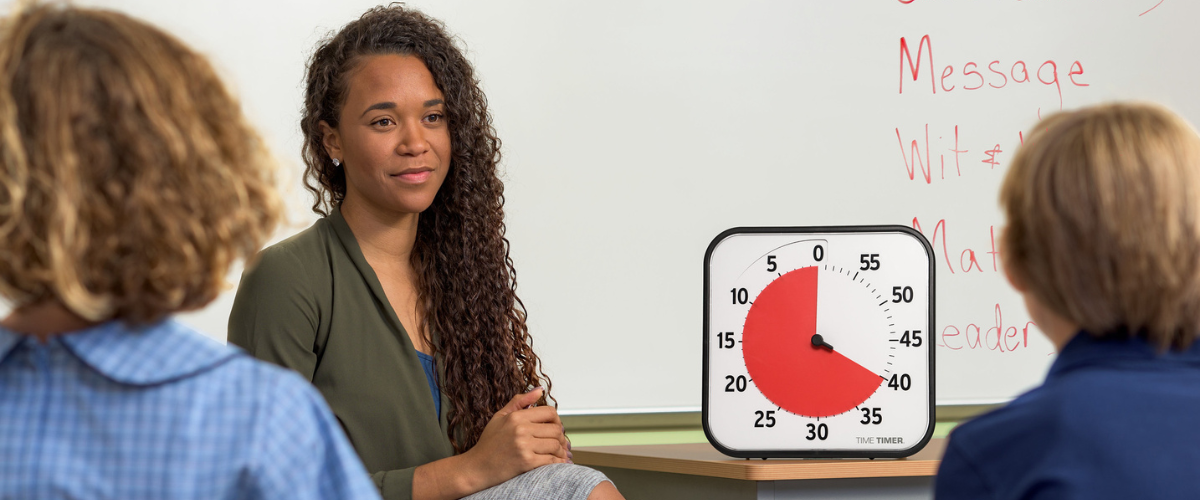
The first few minutes of a class can set the tone for the rest of the lesson. Instead of repeating verbal instructions every morning, pair a visual schedule with a Time Timer® Original 8". The Time Timer Visual Scheduler can be a great addition to the classroom, especially for making clear the entry routine.
Keep a simple checklist of items like "Turn in folder," "Start morning work”, right next to the timer.
As students walk in, they can see what they need to do and how much time they have before the morning meeting begins. This easy addition to back-to-school classroom setup can get students in a mindset of settling in and getting organized for a lesson as soon as they walk in. It can also clear up confusion and cut down on the need for constant reminders, teaching students independence.
2. Independent Table Work & Centers
Building student stamina for small groups and centers doesn't happen overnight. This skill has to be taught within the first few weeks. The Time Timer® Original 8" Learning Center Classroom Set (available in Primary or Secondary Colors) is built for this exact use case.
With three color-coded timers, teachers are able to place a different timer at each table group or learning station. This lets students know how long to stay engaged before rotating.
This frees the teacher to work uninterrupted with a small group while the rest of the class works independently. A Time Timer visual timer can act as a core tool for establishing elementary classroom routines that stick.
3. Classroom Transitions
Transitions can be short but chaotic, often being the time when classroom-management strategies fall apart. Students may be excited to move onto the next activity or class, or just feel relieved that the last one is over.
Something like an open-ended "clean up now, please" invites chaos. If a countdown appears out of nowhere, that may add pressure that students may not respond to. Instead, it can be useful to have a countdown timer to the transition, then reset it for the transition.
What can work especially well here is a large highly visible Time Timer® MAX (17") or Time Timer PLUS® (60-Minute) set for two or three minutes.
With Time Timer visual timers, students can physically watch time disappear. This can turn cleanup or moving to the rug into something closer to a game than a scramble.
Teaching how to teach classroom transitions this way in week one leads to smoother quieter shifts between activities for the rest of the year.
4. Personal Hygiene and Bathroom Breaks
Health habits are part of the routine-building process too, especially for younger students. The Time Timer WASH + Soap Dispenser® is a touchless handwashing timer that breaks the handwashing process into clear visual intervals for getting soap, scrubbing, and rinsing.
The touchless design lets students complete the entire routine independently at the sink without teacher supervision.
This timer can be a small addition that reinforces important lifelong habits, fitting naturally alongside any classroom's broader self-regulation in children goals.
5. "First/Then" Expectations & Individual Executive Functioning
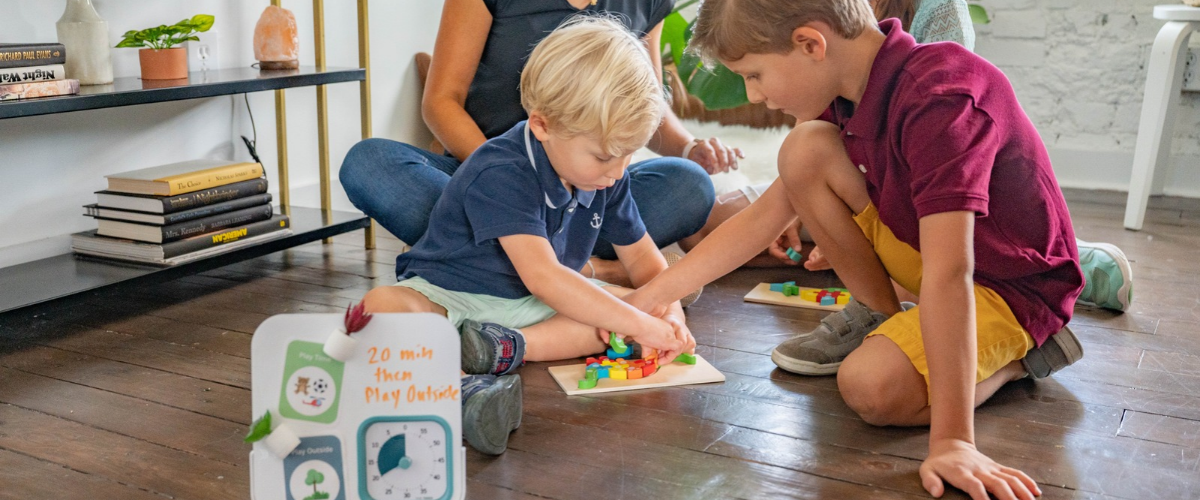
Not every routine needs to involve the whole class. Some students, particularly those who benefit from visual supports for ADHD and Autism, need individualized structure. This helps them manage transitions, anxiety, or early-finisher time.
The Time Timer® MOD with the Dry Erase Board Accessory is for exactly this kind of micro-routine. A teacher can write "First read / Then peer-review essays" directly next to the disappearing red disk. This simple design gives students a clear independent visual of what's expected and what's coming next.
Time Timer visual timers in this context can improve executive functioning skills in the classroom with a neuroinclusive classroom design. Time Timer’s visual time-management tools support diverse learners without singling anyone out.
Why Start With Routines?
Classroom instruction is as strong as the classroom structure underneath it. Time management in classroom structure helps students learn through routine how to enter the room at the start of class, work independently, transition between activities, care for their hygiene, and manage their own time expectations.
Teachers get back the instructional minutes that would otherwise be lost to redirection and repeated instructions. Visual timers for the classroom are more than just clocks, but are a communication tool. Time Timer visual timers reduce reliance on verbal cues, support neurodiverse learners, and build the kind of classroom management tools that make the rest of the year easier.
If you're planning your back to school classroom setup, consider starting with these five routines while using Time Timer products for support.