

Transitions are a big part of daily life, and they’re often the moments that cause the most friction. Tidying up a play area, finishing a work task, or getting ready to leave a classroom all require stopping one activity and starting another. Without a clear sense of how much time is left, those moments can feel abrupt or stressful. Visual timers help by making time visible. They add structure, reduce uncertainty, and support smoother transitions for everyone.
Why Transitions Can Be Hard
Shifting from one activity to another often takes more energy than we realize. When we’re engaged, our attention and body are settled into a rhythm. Being asked to stop can feel jarring, especially when the endpoint feels unclear or sudden. For neurodivergent people, transitions can be even more challenging. Without a predictable timeline, it’s easy to stack stuck in the current activity or feel uneasy about what’s coming next.
Stress around transitions often shows up in familiar ways: procrastination, rushing at the last minute, or becoming dysregulated when time runs out. These reactions aren’t about motivation or cooperation. They’re signals that the nervous system needs more information. Visual timers provide that information in a clear, communal way.
How Visual Timers Support Transitions
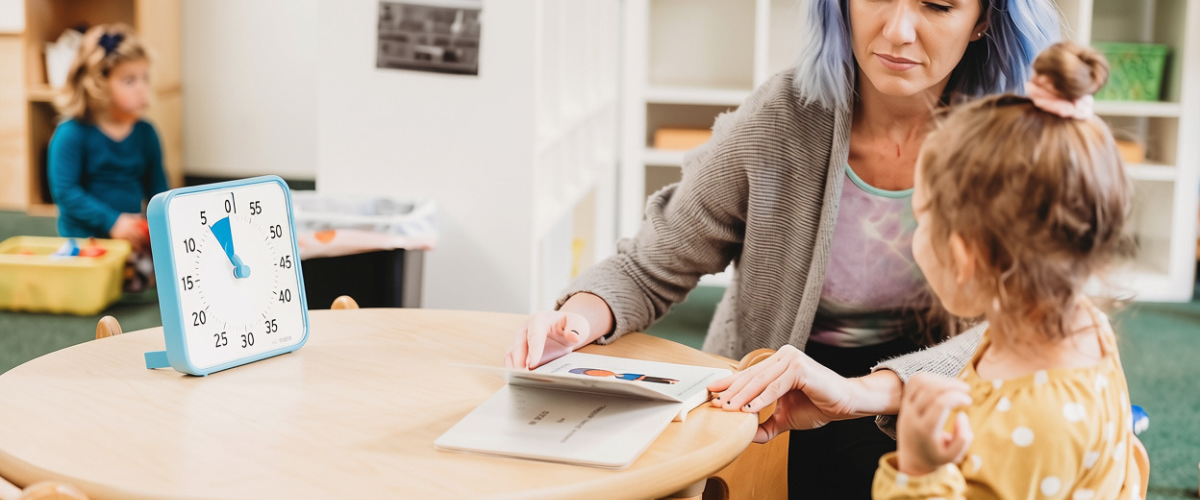
Visual timers make time easier to understand. Instead of guessing how long something might take, you can see how much time is left and adjust your pace along the way. This visibility reduces anxiety, supports focus, and makes task expectations feel more manageable.
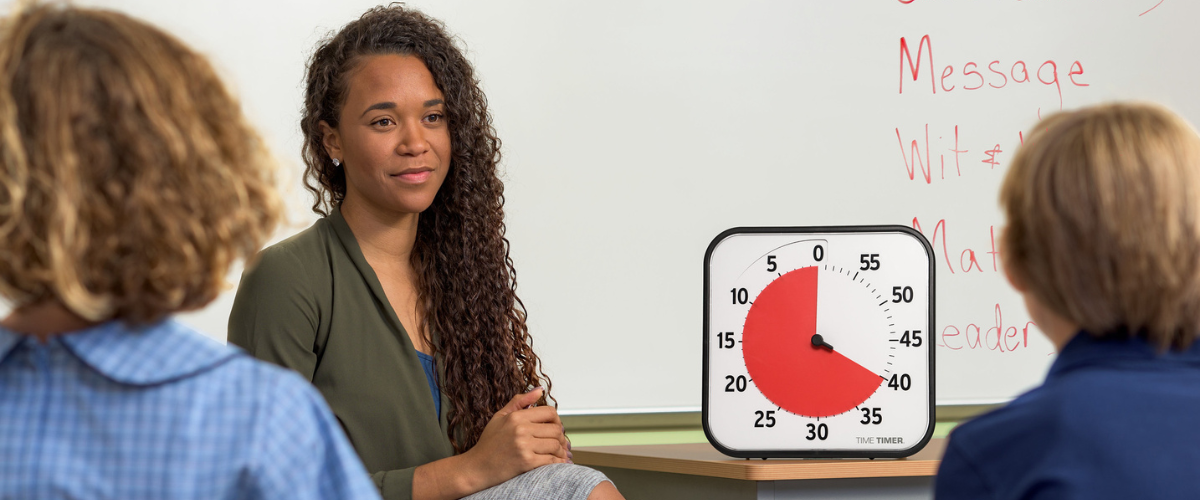
During clean-up or pack-up, a Time Timer turns an open-ended request into a defined window. That clarity makes it easier to prioritize tasks, stay engaged, and finish without feeling rushed or caught off guard.
Over time, visual timers also support independence. When you can track time yourself, there’s less reliance on reminders and external pressure. You can start to notice your own rhythms, make small adjustments, and feel more in control of completing tasks. That sense of ownership builds confidence and calm, for kids and adults alike.
Practical Tips for Different Settings
Classrooms
Visual timers are especially helpful during clean-up or pack-up periods. Using a large timer, like the Time Timer Original 12,” makes it easy for students to see how much time is left and manage themselves. Pairing the timer with a gentle cue, like a song or a chime, can help signal that a transition is coming.
Home
At home, visual timers support daily routines without turning them into a power struggle. They’re useful for chores, morning routines, and after-school tasks. For teens, timers clarify expectations while preserving independence, which often reduces the need for repeated reminders.
Work
At work, visual timers can create a clear stopping point for tasks or meetings. Knowing there’s an endpoint often makes it easier to start, stay focused, and wrap up without procrastinating.
Setting Up for Success
-
Choose a realistic timeframe. Think about how long the activity usually takes and plan from there. Cleaning up toys might need 5-10 minutes, packing a school bag around 5 minutes, and focused homework time closer to 15-20 minutes.
-
Use a Time Timer. If you’re introducing a visual timer for others, show the timer and name both the task and time available. Simple language like, “We have 10 minutes to clean up before snack,” helps set clear expectations.
-
Offer gentle guidance. As the timer runs, offer support as needed. You may encourage focusing on one area at a time or breaking the task into smaller steps. The timer does much of the work by showing how much time is left, which reduces the need for constant reminders.
-
Pause and check in. When the timer ends, notice what’s finished and what still needs attention. If more time is needed, setting another short timer can keep the transition calm and collaborative. You can also use what you notice to adjust how much time you allow for the task next time.
Transitions don’t have to feel rushed or tense. Visual timers offer structure while respecting natural energy levels and attention. When time is visible, expectations are clear and overwhelm tends to ease. With consistent use, tasks become easier to complete, transitions feel more predictable, and there’s more energy for whatever comes next.