

For many of us, focus becomes harder the moment it is expected. Advice to “manage your time better” or “just start” can miss the real question: how does time feel in your mind and body? When it feels rushed, vague, or endless, attention scatters, and you may notice tension in your shoulders, shallow breathing, or mental strain. Improving focus isn’t about forcing yourself – it comes from taking care of yourself, honoring your natural rhythms, and making time visible and manageable. When the body and mind can settle, space opens for attention to arrive naturally.
Focus and the Nervous System
Focus is closely connected to how safe and settled the body feels. When a task feels uncertain or urgent, the body may respond with restlessness, avoidance, or fatigue. For neurodivergent people, this uncertainty can quickly drain energy and attention.
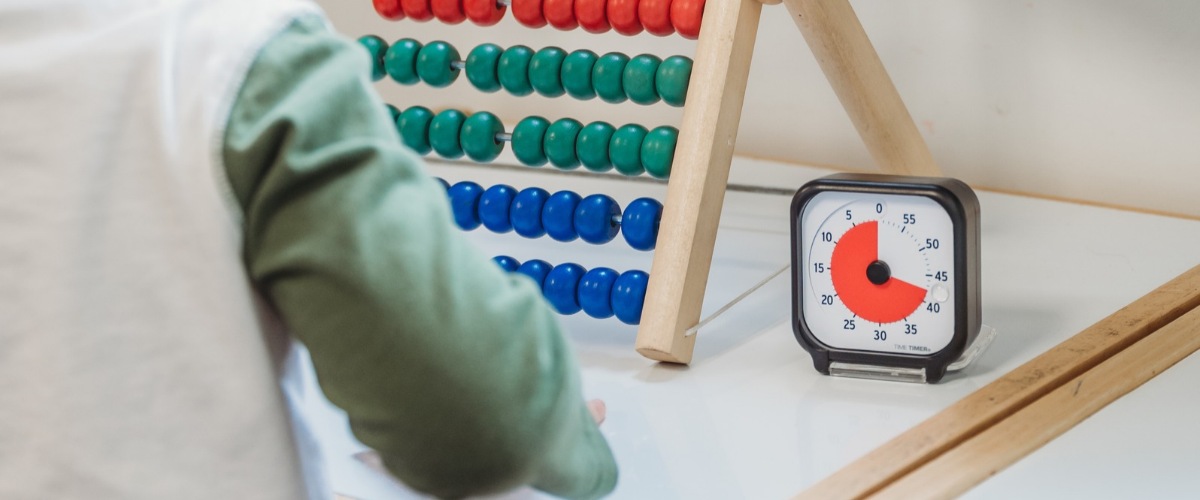
When time isn’t clearly defined, we often try to track it internally, by checking the clock, estimating elapsed time, or worrying how much longer we need to continue. A visual timer removes that burden. Time becomes contained, creating a clear boundary: work happens within this window, followed by a pause. When the body trusts the task won’t be endless, attention can settle more easily.
Focus and Flow
Flow is a state of being fully absorbed in a task where effort feels aligned rather than forced. It comes from working with your energy, not from pressure. Focus naturally comes in cycles, with periods of ease and periods of resistance. Expecting constant concentration often leads to burnout or disengagement.
Short, realistic work periods support this natural rhythm. When you set a visual timer for a length of time that feels manageable, the body can settle into the task without pressure.
Focus and Mindfulness
Mindfulness is noticing what is happening as it happens, without judgement. Applied to focus, it turns distraction into information rather than a problem to fix. It shows you where your energy, interest, and capacity are in the moment.
Over time, this awareness helps you recognize patterns in focus and notice subtle signals, such as tension, fatigue, or restlessness, so you can adjust without pressure. Mindfulness creates a calm space where focus can arise naturally instead of being forced.
Focus and Energy
Focus depends on energy. Sleep, nourishing food, hydration, movement, sensory input, emotional demands, and stress all influence attention. When energy is low, pushing through often increases frustration, mistakes, or mental shutdown instead of meaningful progress.
An energy-based approach looks at the whole day, week, or month, not just individual tasks. Notice when your energy is higher and use visual timers to protect those windows for demanding work. During lower-energy periods, use timers to support rest, transitions, or lighter tasks. Seeing time clearly helps you pace yourself and prevents overextending.
Practices for Focus
Here are a few ways to put these ideas into practice without adding pressure:
-
Set up a small pre-task ritual. Before you start, take 1-2 minutes to stretch, roll your shoulders, or take a few deep breaths. Notice how your body feels. This signals to your nervous system that it’s safe to begin.
-
Choose a simple intention. Choose a short phrase that inspires you, such as “stay curious” or “take the next step.” Let it gently anchor your attention without pressure.
-
Work with your energy. Identify when your energy naturally peaks and schedule demanding work for those windows. Reserve lower-energy periods for easier tasks or breaks.
-
Use short, clear time blocks. Set your Time Timer for 15-20 minutes. Focus fully. When the time ends, pause, notice your energy, and decide your next steps: continue, move, rest, hydrate, or switch tasks. Clear options reduce pressure and make focus flexible.
-
Check in and reflect. After each session, spend a minute noticing what worked, how your body and mind felt, and any distractions. Small adjustments over time help focus become easier and more reliable.
Improving focus doesn’t rely on pressure or willpower alone. It’s supported by flexible structure, natural rhythms, and self-care. When time is visible and work periods feel safe and contained, your body can ease into the task. From that calm space, attention can show up naturally. With a little support and kindness toward yourself, focus becomes something you welcome rather than force, a steady and sustainable way to work.